.png)
Finish Every Movement for a Polished Powerful Dance Performance

A dance routine can have strong choreography, clean formations, and impressive technical skills, but still feel unfinished if the details are rushed. The difference often lives in the last inch of a reach, the final count of a turn, or the moment between one step and the next.
Finishing every movement means carrying each action all the way through before moving on. It is the choice to extend through the fingertips, control the landing, hold the focus, and stay connected to the music until the phrase is complete.
On the competition stage, those choices matter. Judges notice when dancers commit to every detail. Audiences feel it too. A polished performance does not happen only because of big tricks or high energy. It comes from control, intention, and the discipline to complete each movement with purpose.

What it means to finish a movement
Finishing a movement is more than stopping at the right time. It means giving each step a beginning, middle, and end.
A dancer who finishes well does not drop energy after a kick, collapse out of a turn, or let the arms fade before the next count. The body stays active through the full phrase. Even small transitions feel complete.
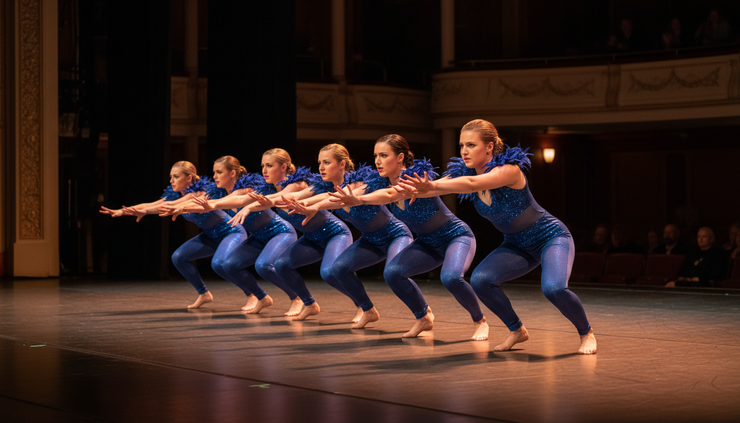
Think about a simple arm reach. An unfinished reach might stop at the elbow or wrist. A finished reach extends through the shoulder, forearm, wrist, hand, and fingertips. The dancer’s focus supports the direction of the reach. The breath, posture, and timing all match the intent.
That same idea applies to every part of a routine:
A leap finishes through the landing, not just the height in the air.
A turn finishes with a controlled spot and clear placement.
A floor transition finishes when the body fully arrives in position.
A facial expression finishes the emotion of the phrase.
A formation change finishes when spacing, body angle, and focus settle together.
This level of completion creates clarity. The audience can read the choreography. The judges can see the technique. The dancer looks prepared, not rushed.
Body control creates a cleaner performance
Strong movement completion depends on body control. Without control, dancers may hit shapes but struggle to hold them, connect them, or exit them cleanly.
Control shows up in the small moments. It is the steady core during a slow extension. It is the quiet landing after a jump. It is the ability to stop without wobbling, drop the shoulders without losing posture, and change levels without throwing away alignment.
A clean performance often comes from asking simple questions in rehearsal:
Did the movement stop because it was finished, or because the next step arrived?
Did the arms support the choreography, or did they fall out of it?
Did the body stay lifted during the transition?
Did the dancer hold energy through the final count?
These questions help dancers become more aware of habits that can weaken a routine. Some dancers rush through transitions. Others relax the hands too early. Some lose focus between skills. Once these patterns become visible, they can be corrected.
Body control gives choreography shape. It helps dancers show where one idea ends and the next begins. That makes the routine feel organized, confident, and stage-ready.

Musicality helps every movement feel intentional
Finishing every movement also depends on musicality. Dance is not only about counting steps. It is about understanding how movement lives inside the music.
Some movements need sharp endings. Others need to melt into the next phrase. A jazz accent may require a crisp stop on the beat. A contemporary phrase may need a sustained reach that continues past the count. A hip-hop groove may need weight, bounce, and control through the full rhythm.
When dancers listen closely, they learn where the music asks them to complete the idea. That makes the performance feel more connected and less mechanical.
A helpful rehearsal tool is to mark the routine without tricks and focus only on timing, breath, and endings. This removes the pressure of full-out skills and lets dancers study the music. Where does the phrase build? Where does it pause? Where should the energy suspend? Where should it snap?
Musicality also helps prevent rushed dancing. When dancers chase the next step, the routine can look busy. When they move with the music, they create space for the choreography to land.
A finished movement gives the audience time to see the dancer’s choice.
That choice may last only a split second, but it can make a performance feel more mature.
Clean transitions keep the routine connected
Transitions are often where polish is won or lost. A dancer may execute a beautiful turn, then lose energy while moving to the next formation. A group may hit a strong picture, then break the moment by walking without purpose.
Clean transitions do not mean every second needs to be dramatic. They mean every second needs intention.
A transition can be soft, sharp, fast, slow, simple, or complex. What matters is that it belongs to the routine. The dancer should know where the eyes go, how the arms travel, what pathway the body takes, and when the energy changes.
Strong transitions also help groups look more unified. If one dancer releases early or arrives late, the difference stands out. If everyone completes the phrase together, the whole routine looks cleaner.
To improve transitions, rehearse them as carefully as the major skills. Run the eight-count before and after each big moment. Practice exits from turns, landings from jumps, and pathways into formations. Do not save energy only for the highlight sections.
The movement between the big moments is still part of the performance.
How dancers can practice finishing every movement
Polish improves when dancers train details on purpose. The goal is not to make movement stiff. The goal is to make movement complete.
Try these rehearsal habits:
Slow the phrase down
Dance at half speed and notice where energy drops. Slow work exposes unfinished arms, loose feet, unclear focus, and weak transitions.
Hold the ending shape
After a turn, jump, reach, or accent, freeze for one extra count. This builds control and teaches the body to complete the action before leaving it.
Film short sections
Video reveals details that can be hard to feel in the moment. Watch for dropped elbows, unfinished hands, relaxed posture, or rushed transitions.
Practice through the final count
Many dancers relax too early at the end of a routine. Train the ending like any other skill. Hold energy through the last note, the last breath, and the last visual picture.
Use focus as part of the choreography
The eyes should not wander. Clear focus can make movement look sharper, bigger, and more confident.
These habits help dancers bring more intention into the studio and onto the stage. Over time, finishing movement becomes natural. It becomes part of the dancer’s technique, not an extra layer added at the end.

Every detail is a chance to shine
A memorable performance is built through choices. The choice to stretch the line fully. The choice to control the landing. The choice to stay present between steps. The choice to finish the final count with the same energy as the opening moment.
At ORO Dance Competition, we believe every detail is an opportunity to shine. Dancers who learn to finish every movement bring more than technique to the stage. They bring confidence, artistry, and a sense of completion that helps the whole routine feel powerful.
The next time a piece feels almost ready, look closer. The polish may be waiting in the fingertips, the transitions, the breath, or the final second before the lights fade.
By Yeni Guardado


Comments