
Competition Day Confidence Starts With a Dancers Morning Routine

Competition morning has a special kind of energy. Costumes are ready, music has been practiced over and over, and the stage is waiting. Along with that excitement, dancers may feel nerves, pressure, or a rush to get everything done on time.
That is why the way the day begins matters so much.
At ORO Dance Competition, we believe confidence starts long before a dancer takes the stage. A calm, thoughtful morning routine can help dancers feel prepared, focused, and ready to enjoy the full experience.

Start the night before so the morning feels lighter
A strong competition-day routine begins before the alarm goes off. The night before is the best time to handle the details that can create stress in the morning.
Lay out everything needed for the day, including:
Costumes and accessories
Dance shoes for each routine
Tights, socks, and backup basics
Hair supplies and makeup
Snacks and water
Schedule, entry details, and music notes if needed
Warm-up clothes
A small emergency kit
That emergency kit does not need to be complicated. Safety pins, bandages, hair ties, bobby pins, clear nail polish, tissues, and stain wipes can save the day when little surprises happen.
Sleep also plays a big role. Dancers do not need a perfect night to perform well, but rest helps with focus, mood, memory, and energy. A simple bedtime routine can make it easier to settle down. Pack the bag, review the schedule once, set alarms, then step away from competition talk for a bit.
The goal is not to control every moment. The goal is to remove as many avoidable stress points as possible.
Give the body steady energy
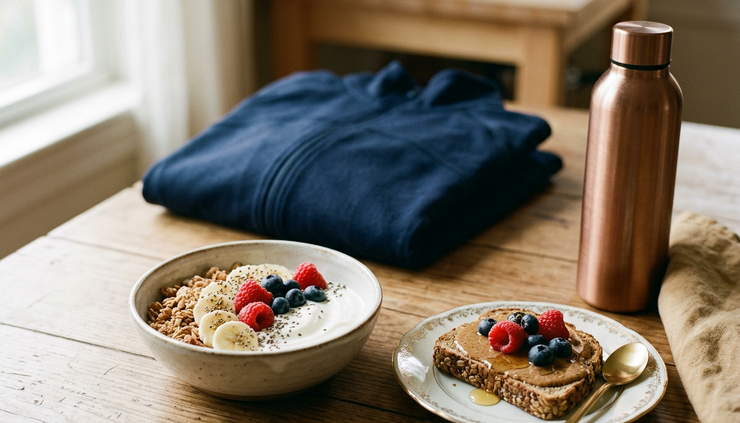
Competition days can be long. Some dancers perform early. Others may wait hours between routines. A balanced breakfast gives the body something steady to work with.
The best choice is usually simple and familiar. Competition morning is not the time to test a new meal, a new drink, or anything that might upset the stomach.
Good options may include:
Oatmeal with fruit
Eggs with toast
Yogurt with granola
A banana with nut butter
A smoothie with protein
Whole-grain toast with avocado or cheese
Hydration should start early too. Sipping water in the morning is easier than trying to catch up right before going on stage. A refillable bottle helps dancers keep track throughout the day.
Snacks matter just as much as breakfast. Pack foods that are easy to eat between rehearsals, warm-ups, and costume changes. Think fruit, crackers, trail mix, cheese sticks, granola bars, or pretzels. Choose snacks that feel good in the body and are not too messy near costumes.
Build in time for getting ready without rushing
Rushing can make nerves feel bigger. A dancer who is scrambling to find shoes or fix hair may arrive already tense. A dancer who has enough time to get ready can begin the day with more control.
A helpful morning schedule might include extra time for:
Eating breakfast without hurrying
Hair and makeup
Travel
Parking and check-in
Finding dressing areas
Bathroom breaks
A calm warm-up
Families can help by building in a buffer. Even 15 extra minutes can make a difference. Traffic, forgotten items, long lines, or last-minute costume fixes are much easier to handle when the morning is not packed too tightly.
It also helps to keep the car organized. Put costumes where they will not wrinkle. Keep snacks and water within reach. Store small accessories in labeled bags. If a dancer has multiple routines, separate items by routine so quick changes feel less chaotic.
For younger dancers, a printed checklist can be comforting. They can check off each item before leaving home. This gives them a sense of responsibility and reduces repeated questions like, “Do we have everything?”
Warm up the body and settle the mind
A safe warm-up helps the body shift from morning mode to performance mode. It should feel gradual, not rushed.
Start with gentle movement, then build. Light cardio, mobility work, and dynamic stretching can help dancers feel awake and ready. Save deeper stretching for when the body is warm. If a teacher or studio has given a specific warm-up, follow that guidance.
A good warm-up also includes the mind.
Nerves are not a sign something is wrong. They often mean the dancer cares. The key is learning how to work with that energy instead of fighting it.
Try a simple grounding routine:
Take three slow breaths.
Feel both feet on the floor.
Relax the jaw and shoulders.
Think of one correction to focus on.
Repeat one positive phrase.
That phrase should feel believable. Instead of forcing “I will be perfect,” try:
I am prepared.
I can trust my training.
I will dance one step at a time.
I am allowed to enjoy this.
Positive self-talk does not erase nerves. It gives dancers something steady to return to when the room feels busy.

Keep the day calm after arrival
Once at the venue, the morning routine continues. Check in, find the dressing space, review performance times, and keep essentials close. Then pause.
Competition venues can feel exciting and loud. There may be music playing, dancers practicing, families moving around, and schedules shifting. A calm arrival plan helps dancers stay centered.
Here are a few habits that help:
Keep voices calm during quick changes or schedule checks.
Avoid comparing costumes, tricks, or routines with other dancers.
Focus on personal preparation instead of what everyone else is doing.
Eat small snacks when there is enough time before performing.
Sip water throughout the day.
Celebrate effort, teamwork, and growth.
Parents and supporters play a big part in the mood of the morning. A dancer often takes emotional cues from the people around them. Encouragement, patience, and practical help can make the day feel safer and more joyful.
Instead of asking too many performance questions right before stage time, try simple support:
“You are ready.”
“Take a breath.”
“I love watching you dance.”
Those words can mean more than a last-minute correction.
Let the routine support the joy
A dancer's morning routine is not about making the day rigid or perfect. It is about creating enough structure for confidence to grow. When the bag is packed, the body is fueled, the warm-up feels safe, and the mind has a steady focus, dancers can step into the spotlight with more ease.
There will still be little surprises. A bobby pin may disappear. A schedule may shift. Butterflies may show up right before the music begins. That is all part of the experience.
The routine simply gives dancers a place to return.

A great competition day does not start when the music begins. It starts with the small choices made that morning, the breakfast, the checklist, the breath, the warm-up, the kind words, and the quiet belief that the dancer is ready to shine.
By Yeni Guardado


Comments